
How Public Records Work in New York
New York's open-records law is the Freedom of Information Law, or FOIL. It is part of the Public Officers Law and declares a policy that government records are open to the public unless an exemption applies. FOIL covers executive and local agencies, such as the Sheriff's Office and county departments.
The core access section is Public Officers Law § 87, which sets agency duties, copying, and exemptions. The procedures and appeal rules sit in Public Officers Law § 89. Together they form the framework for most Suffolk County public records requests to agencies.
The starting point is openness. FOIL presumes records are available, and it puts the burden on the agency to justify withholding anything. An agency can charge for copies, but it cannot refuse a request simply because answering it takes effort. That presumption is what makes a written request a real tool rather than a polite ask.
Court Records Are Different from Agency Records
This is the point that confuses most requesters. FOIL does not control court case files. Court records follow Judiciary Law, court rules, and case-type statutes instead. So a request for a court file does not go through a FOIL letter.
The split is practical. A Sheriff incarceration record goes through a FOIL request. A divorce decree goes through the County Clerk under Domestic Relations Law. An estate file goes through the Surrogate's Court. Sending a FOIL request to the wrong office wastes time, so match the record to its law first. For court files, see the court records page.
Why does the line exist at all? Courts are a separate branch of government, and their records carry their own confidentiality rules for sealed cases, juveniles, and family matters. FOIL was written for executive and local agencies, not for the judiciary. So the same word, public records, points to two different systems depending on who holds the file.
Suffolk County Clerk Records
The County Clerk is the county's main records office and the busiest clerk's office in New York State. Beyond court minutes, the Clerk records deeds, mortgages, liens, judgments, UCC filings, business certificates, maps, and military discharge papers. The Clerk is the Registrar of Deeds and the County Records Management Officer.
Many of these records are searchable through the Clerk's online portal, with land records imaged from 1987 to the present. The office also runs the Homeowner Watch List, which alerts owners when a deed or land filing affecting their property is recorded. For deeper detail, see the County Clerk page.
The scale here is large. The Clerk's 2025 annual report, filed in early 2026, reported about $496 million in revenue collected for the year and $12.8 million delivered to the county General Fund. That volume reflects how central the office is to property, business, and court filings across Suffolk. Most of those records are public, which is why the Clerk is often the first stop for a county records search.
How to File a Public Records Request
A FOIL request is straightforward once you know the office. Put it in writing, be specific, and send it to the agency that holds the record. The steps below cover a typical request.
- Identify the agency that holds the record, such as the Sheriff or a county department.
- Write a clear request that describes the records as specifically as you can.
- Submit it to that agency's records access officer, by the method the agency accepts.
- Wait for the agency's response; it may grant, deny, or ask for more time.
- If denied, file an administrative appeal before going to court.
A narrow, specific request is handled faster than a broad one, so name dates, names, or file types where you can.
Sheriff FOIL Requests
The Sheriff's Office handles its own FOIL requests. It can generally provide incarceration records for people held at Suffolk correctional facilities. To file, you complete the first section of the form online, print it, sign it, and submit it to the Freedom of Information Officer at the Sheriff's Office in Riverhead.
The Sheriff does not hold every law-enforcement record. Police reports, accident reports, and 911 transcripts come from the Suffolk County Police Department instead. For the full incarceration-records process, see the inmate records page.
| Record | Where to request |
|---|---|
| Jail incarceration record | Sheriff FOIL officer, Riverhead |
| Police or accident report | Suffolk County Police Department |
| Court case file | County Clerk or the court that holds it |
| Deed, lien, or business filing | Suffolk County Clerk |
Public Records Fees
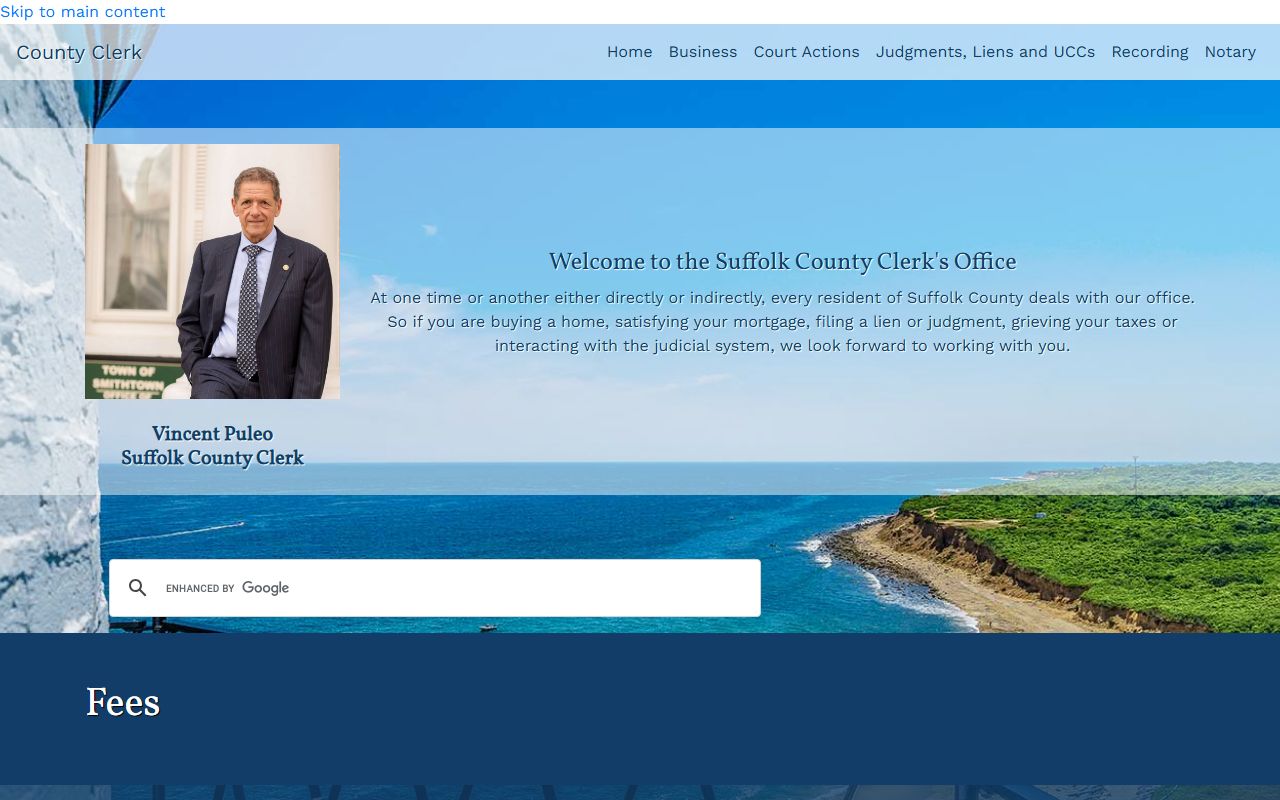
Fees depend on the office and the record. County Clerk copy fees follow CPLR § 8019, and the Clerk publishes a fee page with payment rules. The table shows common County Clerk fees.
| Item | Fee |
|---|---|
| Plain copy per page | $0.65 (min $1.30, max $40) |
| Certified copy per page | $1.25 (min $5, max $40) |
| Court records search | $5 per two years |
| Certificate on search of Clerk records | $9 |
| Statewide criminal records search | $52 (contact OCA) |
The County Clerk fee page sets out the schedule and payment rules.
Source: Suffolk County Clerk fees.
For agency FOIL requests, copy fees may be statutory or based on the actual cost of reproduction for non-paper media.
Confidential Record Categories
Some records are closed even under an open-records system. FOIL allows an agency to withhold records when disclosure would, for example, interfere with an investigation, identify a confidential source, or endanger safety. Court and case-type statutes add more.
Common restricted categories include matrimonial and divorce files, adoption records, many Family Court files, sealed criminal cases, juvenile matters, grand jury records, and confidential personal information in estate files. For sealing and how it works, see the arrest records page.
Privacy also limits parts of otherwise public records. An agency can redact items like Social Security numbers, financial account numbers, and certain personal details before releasing a record. So a record can be released in part, with sensitive fields removed, rather than withheld entirely.
The Sex Offender Registry
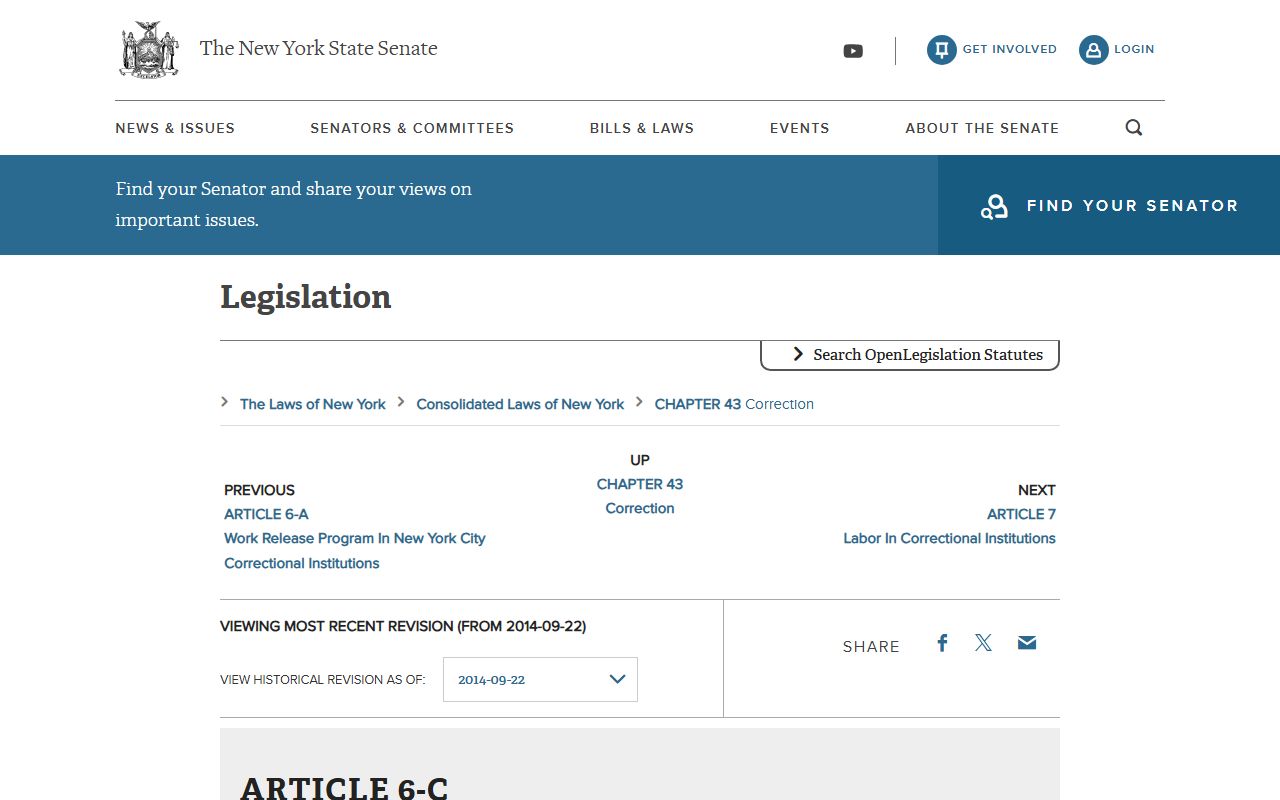
One public-safety record is searchable online: the sex offender registry. New York's Sex Offender Registration Act, Correction Law Article 6-C, governs it. The state DCJS registry lists Level 2 and Level 3 offenders online, searchable by name, county, or zip code.
The registration act is shown below.
Source: New York Sex Offender Registration Act.
For Level 1 or risk-pending information, the registry directs callers to a phone line with the person's name and another identifier.
How to Appeal a FOIL Denial
A denial is not the end. Under FOIL, a requester usually must appeal within the agency before going to court. You send a written appeal to the agency's appeals officer, stating what was denied and why you believe it should be released.
The Committee on Open Government offers advisory guidance on FOIL questions, though it does not decide individual cases. If the agency upholds the denial, the next step is an Article 78 proceeding in the Supreme Court. Court records, by contrast, are challenged through the court, not a FOIL appeal.
Response Times and What to Expect
FOIL sets a rhythm for responses. After it receives a request, an agency must respond within a set window, either by granting access, denying it, or acknowledging the request and giving a reasonable date when it will answer. The law does not let an agency sit on a request without explanation.
In practice, a narrow request moves faster than a sweeping one. If you ask for one named record over a clear date range, an agency can usually act quickly. If you ask for years of broad files, expect a longer date and possibly higher copy costs. Keeping a copy of your request, with the date you sent it, makes any later appeal far easier to support.